
Artificial Intelligence (AI) has significantly influenced the fitness industry, offering tools that assist with workout planning and data analysis. However, AI cannot fully replace the multifaceted role of a personal trainer. Here’s why:
1. Personalized Human Interaction
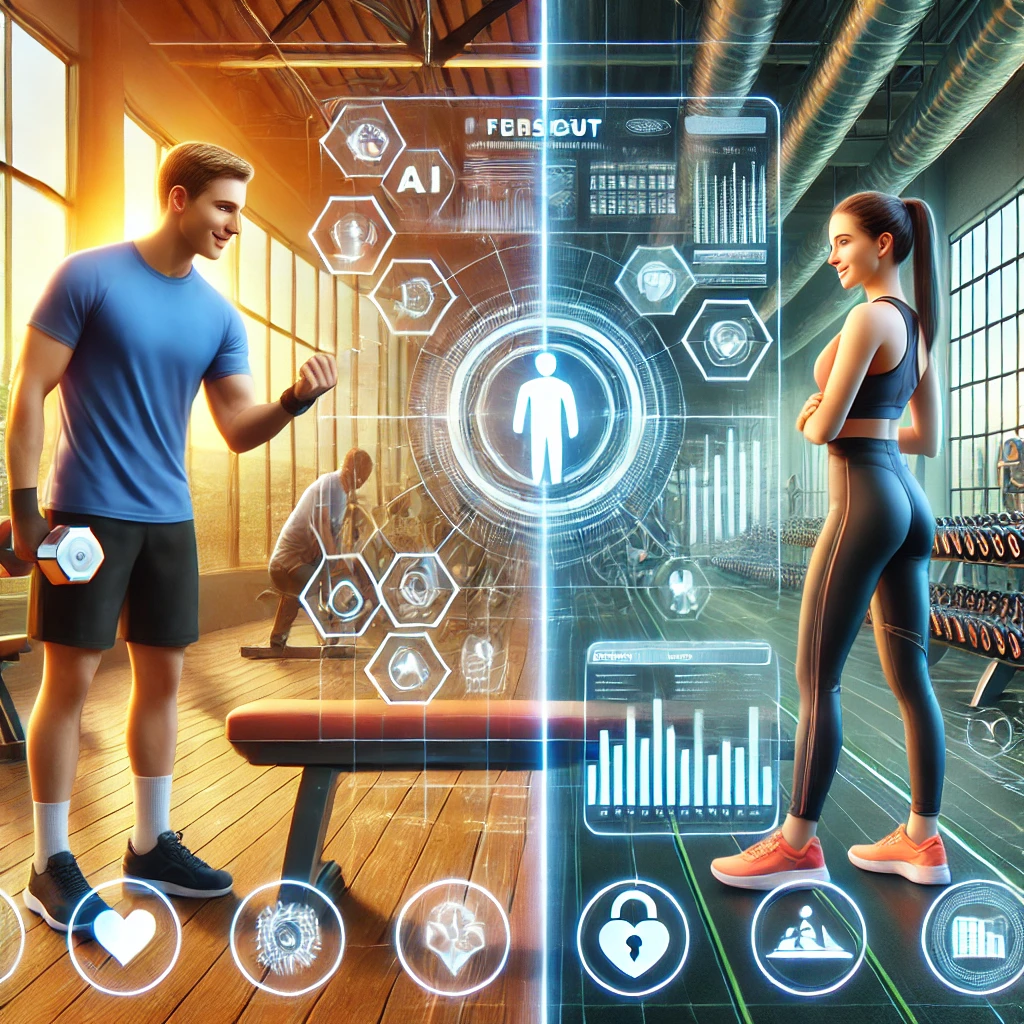
Personal trainers provide individualized attention, adapting exercises and routines based on a client’s unique needs, limitations, and progress. AI applications, while capable of tailoring workout plans using user data, often lack the depth of personalization that human trainers offer. They may not account for subtle factors like a client’s mood, energy levels, or specific health concerns.
2. Real-Time Feedback and Motivation
A significant part of a trainer’s role is offering immediate feedback on form and technique, ensuring safety and effectiveness. While some AI-powered fitness apps attempt to provide real-time feedback using motion analysis, they often struggle with accuracy due to challenges like varying camera angles, occlusions, and individual differences in movement. Moreover, AI lacks the empathetic encouragement that human trainers provide, which is crucial for motivation.
3. Adaptability and Intuition
Human trainers can intuitively adjust workouts on the fly, responding to a client’s energy levels, mood, or unforeseen physical limitations during a session. AI systems operate based on pre-set algorithms and may not adapt seamlessly to spontaneous changes or unexpected client needs. This rigidity can limit the effectiveness of AI-driven fitness programs.
4. Building Trust and Accountability
The relationship between a trainer and client is built on trust and personal connection, fostering accountability. Clients are more likely to adhere to fitness plans when they feel understood and supported by a real person. AI, being impersonal, cannot establish this crucial rapport, which may affect a client’s commitment and consistency.
5. Expertise Beyond Algorithms
Trainers bring a wealth of experience and professional judgment that goes beyond data. They can interpret subtle cues, provide holistic health advice, and adjust training methods that align with a client’s lifestyle and preferences—capabilities that AI has yet to master. Additionally, AI systems heavily rely on the data provided by users, and inaccuracies or omissions in this data can lead to suboptimal or even unsafe recommendations.
In conclusion, while AI can serve as a supplementary tool, enhancing certain aspects of fitness training, it cannot replace the comprehensive and empathetic approach of a personal trainer. The human elements of empathy, intuition, and personalized interaction remain irreplaceable in effective fitness coaching.
Sources:
Comprehensiveness, Accuracy, and Readability of Exercise Recommendations
Challenges of Human Pose Estimation in AI-Powered Fitness Apps
Capabilities and Challenges of AI-Enabled Fitness Applications
How AI Transforms the Fitness Industry