
Author: PT Evelina — Level 3 Personal Trainer (CIMSPA & EREPS Registered)
Experience: Fitness instructor since 2018, 10 years handball athlete, fitness competitor 2012–2013
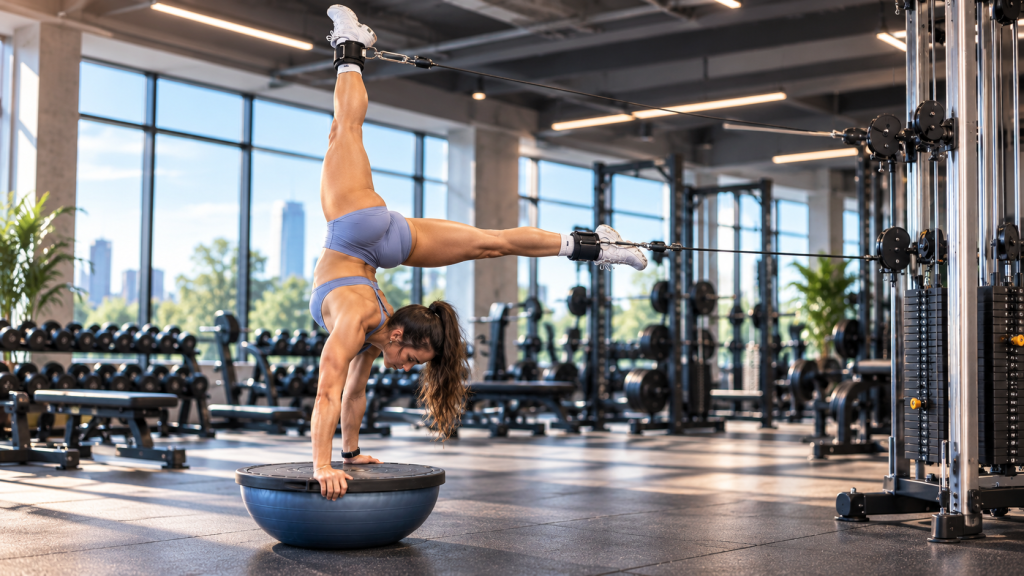
From questionable hygiene and equipment hogging to barefoot workouts and endless phone scrolling — let’s talk about the gym habits that really need to change.
You’ve made it to the gym. You’ve planned your workout, found some motivation and you’re ready to get started.
But before you’ve even finished warming up, someone’s body odour has nearly knocked you unconscious, another person has claimed half the gym, and someone else has turned the leg press into their personal TikTok lounge.
Sound familiar?
A gym is a shared space. People arrive with different goals, abilities and training styles. Some are lifting heavy, others are building confidence, and many are simply trying to squeeze a workout into their busy day.
Good gym etiquette isn’t complicated. It comes down to one thing: your workout matters, but so does everyone else’s.
Here are five gym habits that deserve a little attention.
1. Personal Hygiene: Your Workout Shouldn’t Be a Survival Challenge
Let’s be clear: sweating is normal. It’s how your body regulates temperature, and nobody should feel embarrassed about it.
But there’s a difference between sweating during exercise and turning the entire gym into a breathing endurance test.
We’ve all experienced it. You’re halfway through a set when someone approaches, and suddenly you’re reconsidering your need for oxygen.
Now, body odour isn’t always caused by poor hygiene. Individual biology, clothing and health conditions can all play a role. So let’s not immediately judge people.
However, basic hygiene still matters when exercising alongside others.
A few simple habits make everyone’s experience better:
- Wear clean workout clothes and fresh socks.
- Shower regularly and use deodorant or antiperspirant where appropriate.
- Avoid drowning yourself in perfume to disguise unpleasant smells.
- Bring a clean towel and wipe down equipment after use.
And please, remember that spraying half a bottle of deodorant in the changing room isn’t a substitute for washing.
Working up a sweat is part of training. Making everyone within five metres hold their breath shouldn’t be.
2. Equipment Hogging: Congratulations, You Apparently Own the Gym
Circuit training and supersets are legitimate training methods. I have nothing against them.
But performing a five-station circuit during peak hours while expecting nobody else to touch your equipment? That’s another story.
One machine here, a bench over there, dumbbells on the opposite side of the room. Somehow, all of them belong to the same person.
You approach an empty machine.
Suddenly, someone sprints across the gym like an Olympic champion.
“I’m using that!”
Really? From three machines away?
There’s a difference between using equipment and claiming ownership of it.
During quieter hours, alternating between several exercises might inconvenience nobody. But when the gym is packed, your programme shouldn’t become everyone else’s obstacle course.
The solution? Adapt.
Choose nearby stations, use one piece of equipment for multiple exercises, or allow others to work in when practical.
Even though many gym rules explicitly discourage hogging equipment and encourage sharing during busy periods.
And if you need something another person is using, simply ask:
“How many sets do you have left?”
A revolutionary concept, I know. Communication!
Your gym membership doesn’t come with exclusive rights to the equipment.
3. Shoes, Socks and Bare Feet: Nobody Asked for Your Footprints
Training in socks seems increasingly popular, especially for stretching, balance and stability exercises.
But let’s talk about something more important than gym fashion: safety.
Gym floors aren’t necessarily as safe as they look. Small metal fragments from damaged equipment, sharp debris or unnoticed objects can create hazards.
Imagine stepping on a tiny piece of metal while wearing only socks. That thin fabric isn’t going to offer much protection.
And while ordinary trainers won’t save your toes from a heavy falling dumbbell, suitable footwear can offer protection against minor impacts, abrasions and sharp objects.
Then there’s hygiene.
Some people remove their trainers for stretching. Fair enough, provided the gym permits it and the environment is suitable.
But others take it a step further.
Off come the socks too.
Suddenly, bare feet are everywhere: on mats, benches and equipment where the next person might need to lie down.
Lovely. Nothing improves a workout quite like putting your head where someone’s sweaty feet were five minutes earlier.
Barefoot training isn’t automatically wrong, but it needs an appropriate environment, proper hygiene and consideration for others.
Follow your gym’s footwear rules, use a towel or mat where appropriate, and clean surfaces after use.
Your feet might enjoy their freedom. The next person using that bench probably won’t.
4. Fitness Influencers: Your Muscles Don’t Care About Instagram Views
Social media has made fitness information incredibly accessible. Unfortunately, it has also made some exercises look like auditions for a circus.
Someone is balancing on an unstable surface, holding cables attached to their ankles, while attempting a movement that requires three pieces of equipment and extraordinary coordination.
All apparently to train their glutes.
Meanwhile, squats, lunges and hip thrusts are sitting quietly in the corner, wondering what they did wrong.
Here’s something worth remembering: complicated doesn’t automatically mean effective.
The American College of Sports Medicine’s 2026 resistance training review found that exercise complexity did not consistently influence training outcomes.
That doesn’t mean unusual exercises are useless. Some serve specific purposes, and challenging coordination can be a legitimate training goal.
But if you’re trying to build muscle or improve general fitness, you don’t necessarily need an elaborate routine copied from someone with a million followers.
Before trying an exercise, ask yourself:
- What exactly am I trying to achieve?
- Is this appropriate for my ability and goals?
- Can I perform it safely and with control?
- Would a simpler alternative work just as well?
And if your latest Instagram discovery requires occupying half the gym, perhaps reconsider your equipment choices too.
Your muscles don’t know how many Instagram views your exercise received. And frankly, they don’t care.
5. Phone Scrolling: The Machine Isn’t Your Personal Sofa
You need the leg press.
Someone is sitting on it.
They finish a set, pick up their phone and start scrolling.
One minute passes. Then another.
You’ve completed an entirely different exercise, returned, and they’re still there.
At this point, you’re wondering whether they’re training their legs or preparing for a professional scrolling competition.
To be fair, there’s nothing wrong with using your phone at the gym.
You might be recording your workout, checking your programme or timing your rest periods.
And rest between sets is important. Someone taking three minutes between heavy sets isn’t necessarily wasting time.
The problem isn’t resting. It’s forgetting you’re sharing the equipment.
If you’re still training, keep track of your rest periods and let someone work in when practical.
If you’ve finished, move away.
And if you’re simply catching up on TikTok, please find somewhere else to sit.
Your phone works perfectly well without a leg press underneath your backside.
Gym Etiquette: It’s Really Not That Difficult
Despite the sarcasm, the point isn’t to judge everyone around you.
Gyms should be welcoming places where beginners can learn, experienced members can train, and nobody feels uncomfortable because they’re exercising differently.
Not every unusual exercise is pointless. Not every long rest period is laziness. And not every sweaty person has neglected their hygiene.
A little patience matters just as much as a little consideration.
If someone is using equipment you need, ask politely. If there’s a problem, communicate respectfully. And if behaviour becomes unsafe or repeatedly disrupts others, speak to gym staff.
You don’t have to be the strongest or most experienced person in the room to set a good example.
Just clean up after yourself, respect personal space, share equipment and remember that other people have workouts to finish too.
Your workout matters. But so does everyone else’s.
And one final reminder:
Your gym membership gives you access to the equipment. It doesn’t give you ownership of the building.
FAQ
Not at all. It’s perfectly acceptable to ask politely between sets. Most gym users understand that equipment needs to be shared.
It depends on the exercise, intensity and training goals. Heavier strength exercises may require longer recovery periods than lighter endurance work. Taking appropriate rest isn’t the same as occupying equipment unnecessarily.
It depends on the environment, exercise and gym policies. Socks offer little protection from sharp debris and may be slippery on certain surfaces. Barefoot training may be suitable in designated areas but isn’t automatically appropriate for a commercial gym.
Not necessarily. Exercise complexity doesn’t automatically improve results. Simpler movements can be highly effective when appropriately selected, progressively challenged and performed consistently.
Ask politely whether the equipment is available or whether you can work in. If someone repeatedly refuses to share equipment during busy periods, consider speaking to gym staff.